
Minister vs. Officiant vs. Celebrant: What's the Difference (And Which One Do You Actually Need)?
You're planning your wedding, you type "who marries you at a wedding" into Google at 11pm, and suddenly you're three tabs deep wondering if you need a minister, an officiant, a celebrant, or possibly all three.
Here's the good news: you don't need to know the difference to hire the right person. But it does help to understand what you're actually looking for, so you don't end up with someone who's technically qualified but completely wrong for your day.
Let's clear it up.
Minister
A minister is tied to a specific faith tradition. Ordained (or licensed) within a particular religion, typically leading a congregation, and trained to perform ceremonies within that religion's framework. If you want a traditional religious ceremony, with the language, structure, and rites of your faith intact, a minister (or priest, rabbi, imam, etc., depending on your tradition) is who you're looking for.
The ceremony will reflect the theology of that faith. That's the point. It's not a personalized ceremony built around your relationship. It's a sacred rite, and the couple steps into it.
Officiant
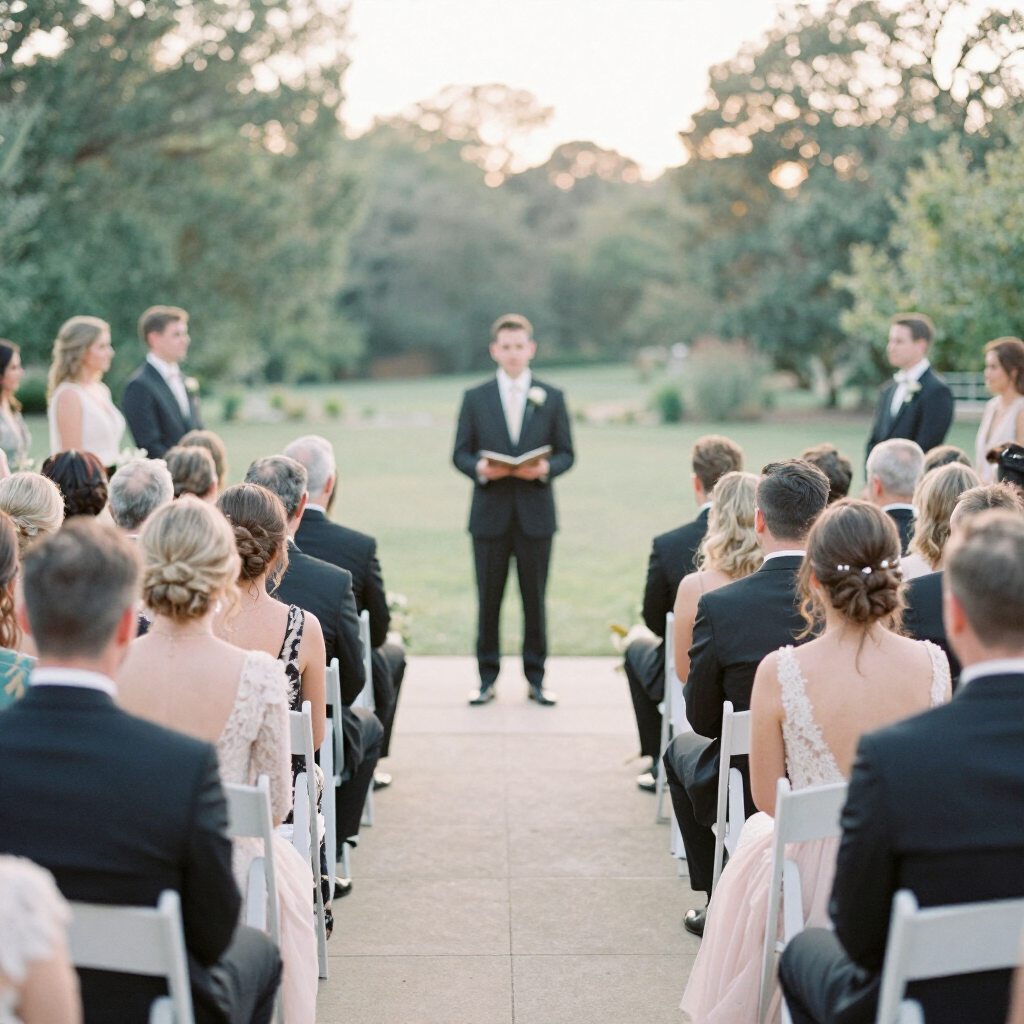
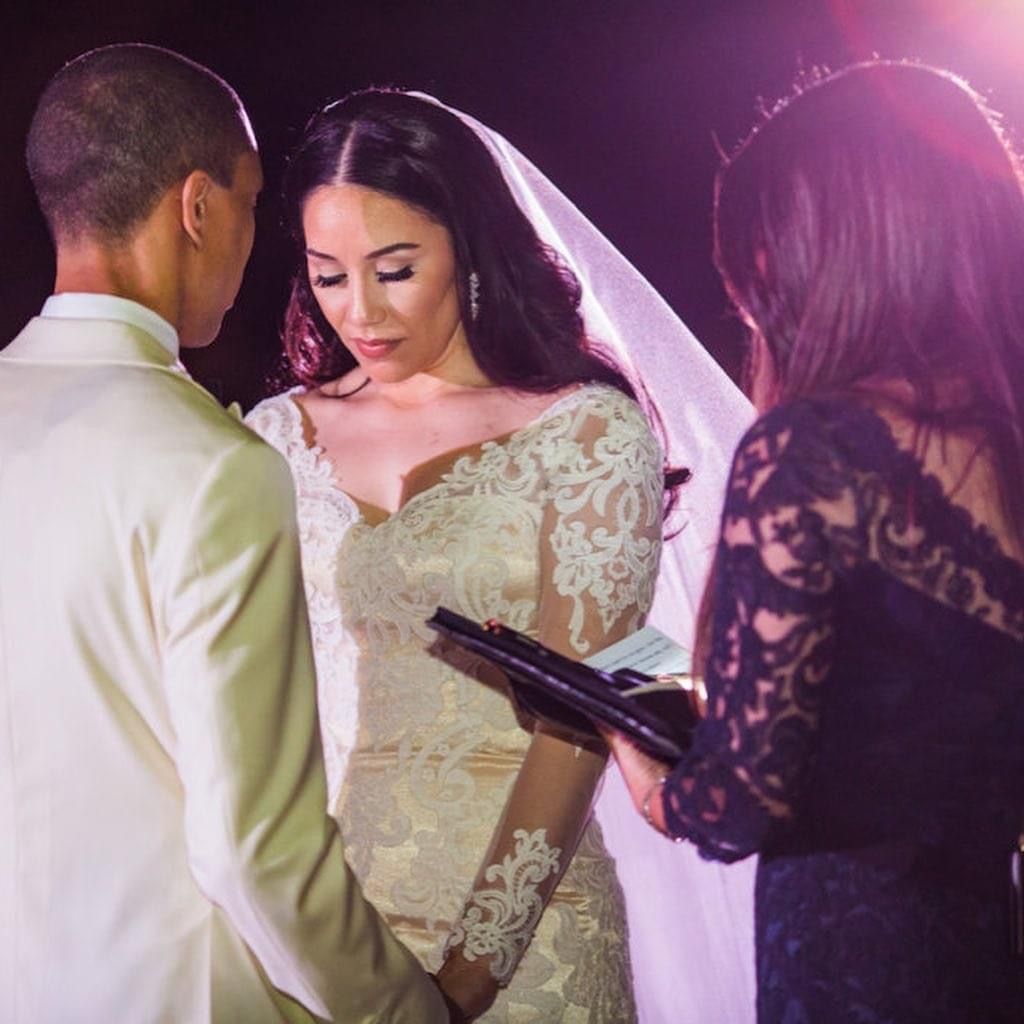
"Officiant" is the umbrella term. It just means: the legally authorized person performing your ceremony. A minister is an officiant. So is a judge. So is anyone your state allows to solemnize a marriage, religious or not.
When people say "we're looking for an officiant," what they usually mean is: we want someone who isn't necessarily tied to a religious tradition, and who can build a ceremony around us. That's the role most couples are actually hiring for these days, whether they realize it's called that or not.
Celebrant
A celebrant is an officiant who specializes in personalized, non-religious (or lightly spiritual, "your call") ceremonies. This is where the real craft lives. A good celebrant doesn't hand you a script. They sit down with you, learn your story, ask the questions you didn't know you needed to answer, and write a ceremony that could only be yours.
This is where I live. I'm not delivering a template with your names swapped in. I'm writing your ceremony, the way a great story is written: with structure, with heart, with a few surprises, and with an ending that lands exactly where it should.
So Which One Do You Need?
Ask yourself one question: do you want your ceremony to honor a faith tradition, or to honor your relationship?
If the answer is "faith tradition," start with a minister, priest, rabbi, or equivalent within your religion.
If the answer is "our relationship, our story, something that actually sounds like us," you want a celebrant.
And if anyone tells you your ceremony has to sound formal, generic, or interchangeable with every other couple's, they haven't experienced a 100% original custom-written ceremony before, so you may want to take their advice with a grain of salt.
When you're vetting anyone to officiant your wedding, religious or not, ask these very important questions:
-Will you meet with us before the wedding, or are we getting a script you've used a hundred times?
-Will the ceremony include our actual story, or just our names dropped into placeholders?
-Are you double-booked that day, and if something runs long, are you rushing off to another ceremony right after ours?
The answers will tell you everything. This is exactly why I say I'm Not Your Ordinary Officiant because what’s most important to me is actually knowing the couple we are honoring and writing something that could never be recycled for someone else.
Still Not Sure Which Path Is Right for You?
That's completely normal, and it's exactly the kind of thing I help couples work through. Reach out anytime, and we'll figure out together what your ceremony should actually sound like.